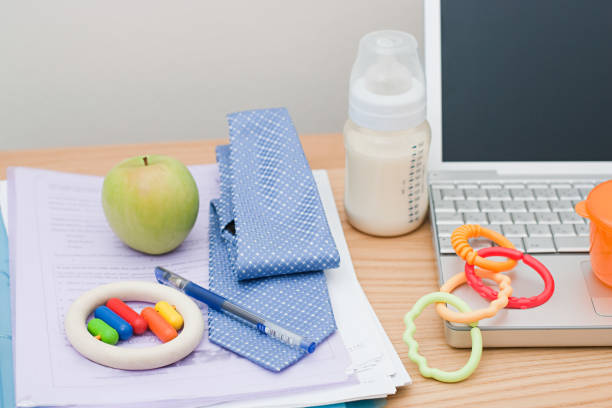
There is a moment in almost every mother’s day when the visual noise of her home starts to hum louder than her own thoughts. It might be the kitchen counter where a cereal box, last night’s mail, a stray sippy cup, and a half-finished coloring sheet have all gathered like old friends who refuse to leave. Or the entryway table, buried under keys, library books, and a small avalanche of grocery receipts. You see it, and your shoulders tighten just a little. You tell yourself you will get to it later, but later never seems to arrive. And so the pile sits, a tiny monument to all the things you meant to do.
What if we took a different approach, one that asks almost nothing of you except a single minute of intention? Let us talk about the power of clearing just one flat surface. Not the whole room. Not the entire house. Not even the entire kitchen. Just one surface—a counter, a table, a nightstand, a desk. The goal is not perfection. The goal is a tiny pocket of visual peace that you can return to again and again throughout your day.
Choose the surface that calls to you the loudest, the one that you walk past most often. Perhaps it is the dining table, currently serving as a catch-all for school papers and craft projects. Or the bathroom vanity, crowded with lotions and hair ties and a toothbrush that belongs to no one in particular. The reason this works is simple: your brain processes visual clutter as a form of unfinished business. Each item you see is a tiny demand on your attention, a silent reminder of a task not completed, a decision not made. When you clear that one surface, you give your mind a small but meaningful rest.
Set a timer for five minutes if that helps, though you will likely need less. Start by picking up everything that does not belong on that surface. Do not sort it yet. Do not file it. Do not make choices about where each thing should live forever. Simply gather the items into a basket, a bin, or even a clean laundry basket. You are not organizing; you are relocating. Move the basket to another room, or tuck it out of sight for now. Then wipe the surface clean—a quick swipe with a damp cloth is enough. Step back and look.
That single clear space, that empty rectangle of order, will feel like a deep breath for your eyes. You may be surprised at how much lighter you feel. It is not that the clutter is gone from your life; it is simply that it is no longer in your immediate line of sight. And that is enough for now.
The beauty of this practice is that it can be repeated any time you feel the overwhelm creeping back. You do not need an hour or a weekend. You need five minutes and one surface. You can do it while you wait for water to boil, while you talk on the phone, or during the quiet moment after the kids are in bed and before you collapse on the couch. It becomes a small ritual of reclaiming your space, one flat plane at a time.
Over days and weeks, you may notice that you start to treat other surfaces the same way, almost without thinking. The coffee table gets a quick sweep before you sit down with your tea. The nightstand gets cleared each evening so that when you turn off the light, the last thing you see is order, not chaos. These tiny acts do not solve every problem, but they whisper to your nervous system that you are capable, that you can create calm in small doses, and that you do not have to fix everything at once.
Mothers carry so much already. The weight of schedules and meals and emotions and errands can make even the smallest mess feel monumental. But you are not required to conquer the whole house. You are only asked to give yourself one clear surface today. That is enough. That is a gift you can give yourself in the time it takes to sip a glass of water. And when you stand back and see that empty space, you might remember that peace does not require perfection. It only requires a little bit of space, a little bit of quiet, and the gentle reminder that you are allowed to put the clutter aside, even if just for now.