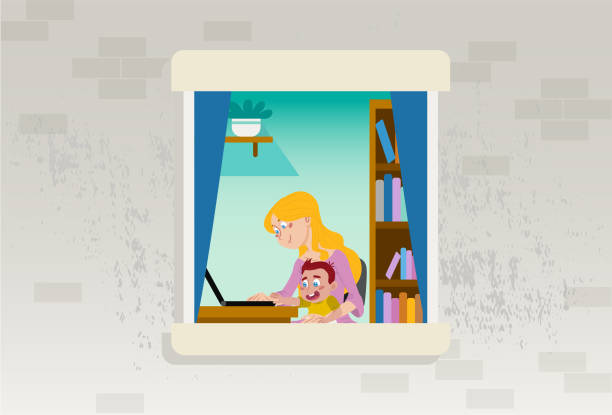
It is a quiet morning, and you are already running. Perhaps you are packing lunches while your toddler clings to your leg, or you are mentally rehearsing a work presentation while nursing a baby, or you are folding laundry at eleven o’clock at night because it is the only quiet moment you have. In the middle of all this, a friend texts: “Can I bring you dinner tomorrow?” Or your mother calls: “I can watch the kids Saturday afternoon.” Or your partner offers: “Why don’t I handle bath time tonight?” And instead of a wave of relief, you feel a knot form in your chest. A voice whispers: I should be able to handle this. They have their own lives. I’ll be a burden. I don’t deserve the break.
If this sounds familiar, you are not alone. So many mothers carry a heavy, invisible backpack of guilt when it comes to asking for help or even receiving it when it is offered freely. We have been taught that good mothers are self-sufficient, endlessly giving, and somehow capable of doing it all without complaint. But here is a gentle truth: that expectation is not only unrealistic—it is unkind to you. And when you refuse help, you are not being strong; you are denying yourself the very support that could help you feel more present, more patient, and more like yourself.
Let us take a moment to reframe what help really means. When you let your neighbor pick up your child from school because you are swamped with a sick baby, you are not failing. You are building community. When you ask your partner to take over bedtime so you can take a fifteen-minute shower without interruption, you are not being weak. You are modeling healthy boundaries for your children. When you tell your mother-in-law that yes, you would love a meal delivery, you are not imposing. You are allowing someone who loves you to show that love in a tangible way.
The guilt we feel often comes from a story we tell ourselves: that our worth as a mother is measured by how much we do alone. But consider this: if your best friend called you and said she was exhausted and needed help, would you judge her? Would you think she was less of a mother? Of course not. You would say, “I’m here. What do you need?” That same compassion must be turned inward. You deserve the same grace you offer others.
One practical way to release guilt is to practice small, low-stakes asks. Start with something tiny. Ask your partner to grab milk on the way home. Ask a neighbor to water your plants while you are out. Each time you ask and the world does not end, you build a little muscle. Over time, the bigger asks—like a night off or a weekend away—begin to feel less terrifying. Another strategy is to acknowledge the gift you are giving the other person. Most people genuinely want to help. They want to feel useful and connected. When you say yes to their offer, you are giving them the gift of being needed. You are strengthening your relationship, not weakening it.
It is also important to name the fear behind the guilt. Often, we worry that accepting help makes us look incompetent. But competence is not about doing everything alone; it is about knowing when to lean on others so you can show up fully for the things that matter most. Your children do not need a supermom who never rests. They need a mother who is present, loving, and real. And you cannot be that person when you are running on empty.
Remember, too, that asking for help is not a sign that you have failed to manage your stress. It is a sign that you are managing it wisely. Self-care is not only bubble baths and green smoothies. It is also the courage to say, “I cannot do this alone.” It is the wisdom to realize that the village that raised generations before us was not a luxury—it was a necessity. We were never meant to mother in isolation.
So the next time a hand reaches out to you, try to pause. Take a breath. And instead of saying, “No, I’m fine,” say, “Yes, thank you. That would be a gift.” Because it is. And so are you.