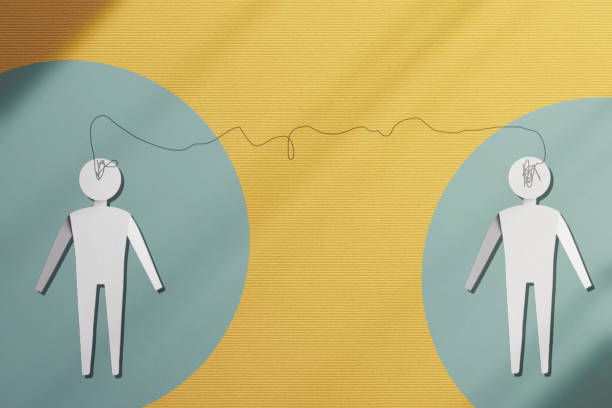
It happens in the quiet moments, often when you are already feeling a bit tender. You are scrolling through your phone while holding a fussy baby, or you are standing in the school pickup line, catching a glimpse of another mother whose hair looks freshly blown out and whose children look, well, serene. A small voice whispers, She is doing it better. She is calmer. She has more energy. Her kids are happier. Before you know it, a single moment of observation has spiraled into a story you are telling yourself about your own inadequacy. This is the comparison trap, and it is one of the most persistent thieves of a mother’s joy.
That voice, the one that points out every flaw and every shortcoming, is what psychologists often call the inner critic. For mothers, this critic is particularly well-rehearsed. It has a lot of material to work with, from the state of your laundry pile to the nutritional content of your child’s lunchbox. But here is the gentle truth you must hold close: that voice is not the truth. It is a habit, a pattern of thinking that has been practiced so many times that it feels automatic. The good news is that habits can be unlearned, and new, kinder thought patterns can be woven in their place.
Reframing is not about pretending that hard things are easy or that you are perfect. It is not about toxic positivity that demands you smile through exhaustion. Real reframing is a much softer, braver act. It is about pausing in the middle of a critical thought and asking yourself a simple question: Is this thought actually helping me? If the answer is no, you have permission to set it down.
Imagine you are holding a heavy rock. The overwhelming feeling of failing compared to another mother is that rock. Now, imagine placing the rock gently on the ground beside you. You are not denying the rock exists. You are simply choosing not to carry it for a moment. In that space, a new thought can arrive. Perhaps it is a compassionate thought, like, I have no idea what her afternoon looked like before this moment. Or perhaps it is a supportive thought, like, I am exactly the mother my children need, even when I am tired.
When you catch yourself comparing your inside to another mother’s outside, try a specific reframing technique known as the “Yes, and” approach. For instance, you might say to yourself, Yes, I am feeling overwhelmed right now, and that is a normal response to a demanding season of life. The word “and” opens a door that the word “but” often slams shut. It creates room for grace. You are not ignoring the hard feelings; you are acknowledging them without letting them define your entire identity.
Another powerful shift involves changing the target of your compassion. Many mothers are quick to soothe a friend who is struggling but turn a harsh, critical eye on themselves. The next time you hear your inner critic, imagine that the thought is being spoken by your own dearest friend. How would you respond to her? You would not list her flaws. You would likely put a hand on her arm and say, You are doing a beautiful job, and it makes sense that you feel this way. Now, turn that exact same kindness inward. This is not selfishness; it is the foundation of resilience. You cannot pour joy into your family from an empty well.
Building this new habit takes practice. You will forget sometimes. You will slip back into the old pattern, and the critic will feel loud again. When that happens, be gentle with yourself. Do not add a layer of criticism for being critical. Simply notice, take a breath, and start again. Each time you choose a kinder thought, you are strengthening a new neural pathway. You are teaching your brain to default toward grace rather than judgment.
Over time, you will find that the comparison trap loses its power. The other mothers are not your competition; they are your companions on this wild, messy, beautiful road. And the inner critic, once a roaring voice, becomes a quiet whisper you can choose to ignore. In that new quiet, there is room for joy. You can laugh more freely with your children. You can rest without guilt. You can see your own tired face in the mirror and recognize not a mother who is failing, but a mother who is human, who is trying, and who is already enough.