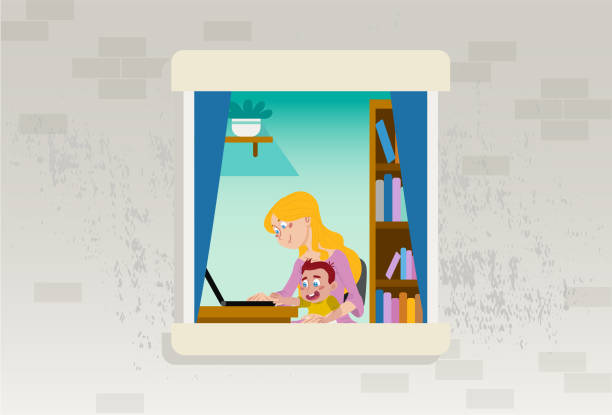
There are some mornings when the universe seems to have a personal grudge against your plans. The baby wakes up thirty minutes early, the toddler insists on wearing mismatched socks and a tutu to preschool, and you discover the coffee maker is inexplicably broken. In moments like these, you can feel the stress rising like steam in a kettle. But what if, instead of letting that steam build up, you could transform it into a shared giggle? Using humor to diffuse stressful situations is not about pretending everything is fine. It is about giving yourself permission to step back, see the absurdity in the chaos, and choose laughter over frustration.
Humor works as a stress diffuser because it changes your brain chemistry in a gentle, powerful way. When you laugh, your body releases endorphins, the natural feel-good chemicals that reduce pain and tension. At the same time, laughter lowers the levels of cortisol and adrenaline, the hormones that keep you in fight-or-flight mode. Even a brief moment of genuine laughter can break the cycle of mounting stress, giving you a small reset button for your nervous system. For mothers who carry the weight of constant caregiving, these tiny resets can accumulate into a more resilient, joyful daily life.
One of the most effective ways to invite humor into stressful moments is to name the absurdity aloud. Imagine you are trying to get everyone out the door for a dentist appointment, but your preschooler has decided that today is the day she will become a cat who does not wear shoes. You could yell, cry, or negotiate. Or you could look at her, look at the clock, and say, “Well, I guess we are taking a cat to the dentist. I wonder if the receptionist will offer her a treat.“ By labeling the situation as something outside the realm of normal, you make it easier to see the ridiculousness. Your child might even laugh with you, and suddenly the tension dissolves into a shared moment of silliness.
Another approach is to create little running jokes with your children that can be called upon during tough times. For instance, if your child has a habit of hiding important items like keys or your phone, you might invent a “mischievous sock monster” who occasionally borrows things. When the car keys go missing again, instead of panicking, you can say in a dramatic voice, “Oh no, the sock monster has struck again! Quick, let’s search before he takes my driver’s license too!“ This turns a frustrating scavenger hunt into a playful game. The laughter that follows helps you both release tension, and your child learns that mistakes and mishaps do not have to be catastrophes.
It is also important to remember that you can laugh at yourself, even when you feel like you are failing. Perhaps you tried to make a healthy snack for your child and ended up with a kitchen covered in banana mush. Or you attempted to fit in a five-minute workout only to have your toddler climb on your back demanding a piggyback ride. Instead of scolding yourself for not getting anything done, you can pause and say, “Well, I was going to do squats, but I guess I signed up for horsey rides instead. Good arm workout!“ This self-compassionate humor reminds you that perfection is not the goal. The goal is connection, flexibility, and staying present.
For mothers who are naturally more serious or who feel that humor is not their strong suit, start small. You do not need to be a stand-up comedian. Humor can be as simple as sending a silly text to a friend describing your crazy morning. It can be making a funny face in the mirror when you are frustrated. It can be choosing to see a spilled cup of milk as a modern art installation on your kitchen floor. The key is to find your own style of gentle playfulness. Some mothers love slapstick, others prefer witty observations, and many find joy in shared family inside jokes.
Humor also works wonders in the long run by building resilience. When you regularly find the funny side of daily stress, you train your brain to look for lightness instead of heaviness. This does not mean you ignore real pain or exhaustion. It means you give yourself a tool to survive the small aggravations so that you have more energy for the big challenges. A mother who laughs often is a mother who can adapt more easily when plans change, when children melt down, and when the laundry pile seems to have a life of its own.
Of course, there are times when humor feels impossible. If you are truly overwhelmed, sleep deprived, or grieving, please do not force a laugh. Let yourself feel your feelings fully. But when the stress is just the ordinary grind of motherhood, a little humor can be a gentle lifeline. You might find that after a good belly laugh with your child, the spilled cereal does not look so terrible, the missed nap is not a disaster, and the broken coffee maker becomes just another story to tell.
The next time you feel the stress tightening your shoulders, try to take a breath and look for something absurd. Maybe it is the way your baby has stuck a Cheerio to their forehead, or how your dog is wearing your child’s hat. Let that small, funny detail be your invitation to laugh. That laughter is not a distraction from your responsibilities. It is a way of embracing them with a lighter heart. And that lightness, shared with your family, is one of the most resilient gifts you can give yourself.