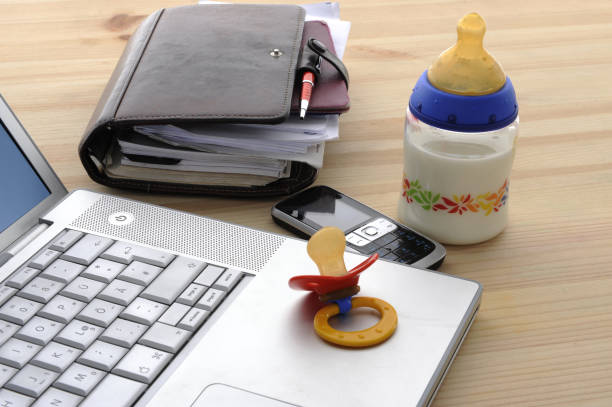


There is a moment that comes for nearly every working mother, often in the quiet of the evening when the dishes are washed, the emails have stopped pinging, and the children are finally asleep. You sit down, and instead of resting, you replay the day. You remember the rushed goodbye this morning, the way your little one clung to your leg as you tried to slip out the door. You recall the meeting that ran late, the dinner that came from a box, the story you skipped because you were just too tired. And then, like a familiar shadow, the guilt settles in. It whispers that you are not enough, that you are choosing the wrong things, that your children deserve more of you than you are giving. This is mom guilt, and it is one of the heaviest burdens a working parent can carry. But what if the path toward easing that guilt is not about doing more, but about learning to be present in the small, imperfect moments you already have?
The secret that many mothers discover only after years of wrestling with guilt is that children do not need perfect mothers. They do not need a mother who never misses a school event, who always has a homemade snack ready, who never loses her temper. What they need, far more than any of these things, is a mother who is truly with them when she is with them. This is the gift of imperfect presence: the ability to put down your phone, to stop mentally composing your to-do list, and to simply look into your child’s eyes for two minutes without rushing. It sounds simple, but it is revolutionary for a mind trained to multitask.
Consider the morning routine. So often, we move through it like a blur—pouring cereal, tying shoes, packing backpacks—while our minds are already at the office. The guilt you feel later is not because you left for work, but because you left without really being there. The next time you find yourself rushing, try pausing for ten seconds. Kneel down to your child’s level. Say their name. Ask one genuine question about their day ahead. That tiny pause, that moment of eye contact, is a seed of connection that will grow far larger than any hour of distracted time you might give them later. It is not about the quantity of minutes; it is about the quality of presence.
The same principle applies to the end of the day. You arrive home exhausted, and the guilt tells you that you need to make up for lost time by being the perfect mother for the next two hours. You try to play a game, but your mind is foggy. You try to cook a meal, but you burn it. And then you feel worse. Instead, you might try a different approach. Tell your child, “I had a long day, and I am tired. I would love to sit on the couch and hold you for ten minutes. Would that be okay?” That honesty is a gift. It teaches your child that rest is important, that feelings are valid, and that love does not require performance.
One of the most powerful ways to manage mom guilt is to change the story you tell yourself about what it means to be a working parent. Society often frames it as a trade-off: you are either fully dedicated to your career or fully dedicated to your children. But that is a false binary. You can be both, and you can be good at both, not because you are superhuman, but because you are present where you are. When you are at work, trust that your children are safe and loved by their caregivers. When you are at home, trust that your work emails can wait. This boundary is not selfish; it is necessary for your well-being and for your family’s.
Another gentle practice is to release the idea of balance as a perfect equilibrium. Balance is not a tightrope where one misstep means failure. It is more like a dance—sometimes you lean toward work, sometimes toward family, and sometimes you simply stumble. That is okay. The guilt arises when you judge yourself for the leaning. Instead, try to adopt a posture of curiosity. Ask yourself, “What does my family need from me right now? What do I need from myself?” The answers will shift daily, and that is the nature of life.
Finally, remember that your children are watching you. They are not watching to see if you make mistakes. They are watching to see how you handle mistakes. When you apologize after losing your patience, you teach them humility. When you choose to rest instead of pushing through exhaustion, you teach them self-care. When you hug them after a rushed morning and say, “I wish I had slowed down, but I love you so much,” you teach them that love is not conditional on perfection.
So the next time the guilt whispers in your ear, meet it with a gentle truth. You are not a machine. You are a mother who is doing her best in a world that asks too much. And in the small, imperfect moments—the ten-second hug, the silly dance in the kitchen, the bedtime story read with a quiet voice—you are giving your children something far more valuable than a perfect schedule. You are giving them your real, present, loving self. That is enough. You are enough.