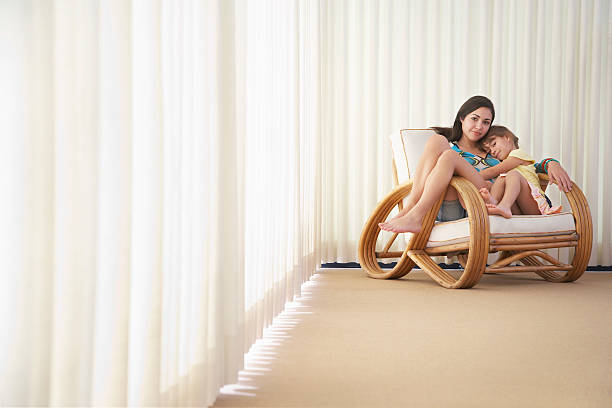


There is a peculiar guilt that settles in when a mother looks at an open afternoon on her calendar. The blank space seems to call out for something to fill it, as if silence and free hours are a form of negligence. We have been taught that a good mother is a busy mother, one who orchestrates playdates, volunteers for every classroom party, and says yes to every favor asked by a friend or a relative. Yet the truth, which so many of us learn slowly and with a certain soreness in our hearts, is that an empty space on the calendar is not a failure. It is a gift. It is the quiet room where rest can breathe, where spontaneity can bloom, and where a mother can simply be, without the weight of obligation pressing down upon her shoulders.
The art of saying no often feels like a harsh skill, a blade we must sharpen to cut away the needs of others. But it does not have to be sharp at all. Saying no can be a soft thing, a gentle hand placed on the chest of our own exhaustion. It can sound like, “I cannot take that on right now, but I am grateful you thought of me.“ It can be a simple, “That does not fit into my week, and I need to protect my time for my family and myself.“ The words themselves matter less than the intention behind them. The intention is not rejection of the person asking, but acceptance of your own limitations. You are not saying no to them. You are saying yes to your own wellbeing, and that is a form of love that radiates outward.
One of the most common traps for mothers is the belief that we must be everything to everyone. We see other mothers who seem to manage it all, who bake from scratch and drive carpools and still have energy for a night out, and we assume that our own struggle is a personal failing. But comparison is a thief that steals not only joy but also the ability to see clearly. Every mother has a breaking point, and every mother has a different capacity on any given day. The mother who seems to have it all together may be running on fumes you cannot see. Your only job is to tend to your own engine, to know when the tank is nearing empty, and to have the courage to pull over and rest.
When you begin to practice saying no, you will likely encounter discomfort. The people around you may be surprised, or even disappointed. Some may push back, because they have grown accustomed to your yes. This is not a sign that you are doing something wrong. It is a sign that you are changing a pattern, and patterns take time to reweave. Stand firm, but stand softly. You do not need to explain yourself in great detail. A simple, “I am not available for that right now,“ is a complete sentence. You do not owe anyone a lengthy justification for protecting your peace.
What you gain from this practice is far more valuable than what you lose. You gain time. You gain the ability to sit on the floor with your child and build a block tower without one eye on the clock. You gain the capacity to take a bath without rushing, to read a book for more than three pages, to have a phone conversation with your own mother without interruption. You gain energy, because you are no longer pouring it into obligations that drain you. You gain the deep, sustaining satisfaction of knowing that when you do say yes, it comes from a place of genuine desire, not from guilt or pressure.
The empty space on your calendar is not an emptiness at all. It is a vessel waiting to be filled with what truly matters. It is an act of self-trust, a statement that your own needs are worthy of space in this world. Mastering the art of saying no is not about becoming cold or unavailable. It is about becoming selective, tender, and wise. It is about understanding that your yes is a precious resource, one that should be offered only to the people and activities that feed your spirit and support your family’s deepest needs. Give yourself permission to hold that gift close, and the overwhelm will begin to loosen its grip, day by gentle day.