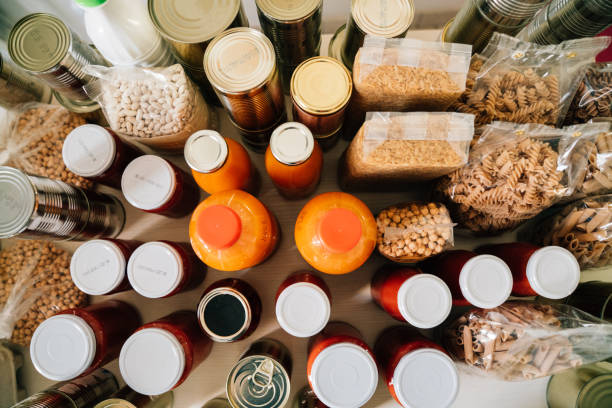
There is a quiet magic hidden in the back of your pantry, behind the cans of beans you bought on a whim and the box of pasta that has been waiting patiently for its moment. In the hustle of feeding a family, it is easy to feel like you must start from scratch every single time. The grocery store calls to you, the delivery apps beckon, and the pressure to prepare something new and exciting can weigh heavily on a tired soul. But what if the most freeing, budget-friendly, and stress-reducing meal you could make tonight was not a recipe you had to hunt down, but something you already own? This is the gentle practice of the pantry meal, and it is one of the kindest gifts you can give both your wallet and your mind.
When we talk about easing financial pressure, we often think about cutting coupons or switching to generic brands. Those are helpful tools, certainly, but they still require you to shop. The real secret to saving money on groceries is learning to shop less. And the way to shop less is to look at what you already have with fresh, forgiving eyes. It is a shift in perspective that asks you to release the guilt of an imperfect pantry. Maybe you bought that jar of sun-dried tomatoes for one specific recipe and never used the rest. Maybe you have a bag of lentils that seemed like a good idea six months ago. Instead of seeing these items as failures, you can begin to see them as treasures waiting for their turn.
Start by taking a deep breath and opening your cupboards, your refrigerator, and your freezer. Do not judge yourself for what you find. This is not a test. This is an act of quiet inventory. You are simply gathering information. You might discover a bag of frozen vegetables, a half-used block of cheese, a can of coconut milk, or a lonely sweet potato. Your goal is not to create a gourmet masterpiece. Your goal is to combine what you have into something nourishing, warm, and edible. This is where the stress begins to melt away, because you are no longer chasing a perfect list. You are working with freedom, not limitation.
A very simple practice that fits beautifully into this gentle approach is the “clean-out-the-fridge” stir fry or the “everything-but-the-kitchen-sink” soup. These are not recipes with exact measurements. They are templates for peace. For a stir fry, you can sauté any vegetables you have, add some protein like leftover chicken or a scrambled egg, and toss it all with whatever sauce you can cobble together from soy sauce, a splash of vinegar, or even a spoonful of peanut butter. For a soup, you can simmer any leftover veggies, a can of tomatoes or broth, and some grains like rice or leftover pasta. The beauty is that there is no wrong way to do this. Your family will eat, and you will have spent zero new dollars.
Another powerful tool is the concept of the “pantry challenge.” You can decide, at the start of a week, that you will not set foot in a grocery store. Instead, you will use only what you have. This might feel daunting at first, but it is incredibly freeing. It forces creativity without the pressure of perfection. You begin to see relationships between ingredients you never considered. The can of chickpeas becomes a quick hummus for lunch wraps. The leftover roast chicken becomes a filling for tacos made from slightly stale tortillas that you revived in a warm pan. Each meal feels like a small victory, and each victory reminds you that you are capable, resourceful, and strong.
This practice is not about deprivation. It is about abundance of a different kind. It is about the abundance of creativity, the abundance of time saved by not wandering store aisles, and the abundance of money that stays in your pocket. When you stop buying ingredients for recipes you will only use once, you break a cycle of spending that often feeds anxiety. The pantry meal asks you to trust yourself. It asks you to believe that what you have is enough. And most importantly, it asks you to release the idea that feeding your family must be complicated or expensive to be good.
There will be nights when you feel frustrated, when the pantry seems bare and the children are hungry. On those nights, remind yourself that a simple bowl of beans and rice, dressed with a little salt and a squeeze of lime, is a meal that has sustained generations. It is okay to serve something plain. It is okay to let go of the expectation that every dinner must be a production. Your children will remember your gentle presence far more than they will remember what was on their plate.
By embracing the pantry meal, you are not just saving money. You are saving your energy for what truly matters. You are teaching your family that resourcefulness is a form of love. And you are giving yourself permission to be imperfect, to experiment, and to find a little bit of peace in the simple act of making do. That is a budget trick no coupon can match.