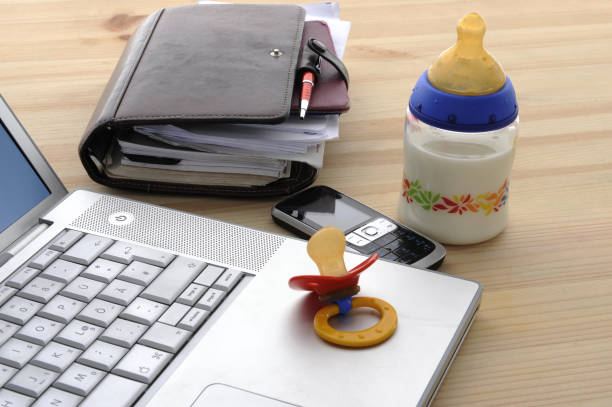
There is a moment in almost every mother’s day when the world feels too loud. Perhaps the baby is crying for no reason you can discern, the toddler has just upended a bowl of oatmeal onto the floor for the third time, or the school-aged child is asking a question you have already answered four times while you are trying to remember whether you paid the electric bill. In that moment, your shoulders climb toward your ears, your jaw clenches, and your mind begins to race with a familiar chant: I cannot do this. I am failing. I need a break I do not have time to take.
Right there, in the thick of that overwhelm, you have a secret weapon. It does not require you to leave the room. It does not ask you to ignore your children, light a candle, or find a quiet corner. It demands nothing from you except a willingness to stop for the space of a single breath. This is the practice of the five-finger breath, and it may be the most powerful ninety seconds of your entire day.
The five-finger breath is a simple technique that blends gentle touch with slow, intentional breathing. You trace the outline of one hand with the finger of the other. As you trace upward along the outside of your thumb, you inhale slowly. As you trace downward along the inside of your thumb, you exhale. You continue this pattern across each finger: up, inhale. Down, exhale. The entire practice takes no longer than a minute or two, but its effects can ripple through the remainder of your afternoon.
What makes this practice so profoundly effective for mothers is that it interrupts the physiological cascade of stress before it can fully ignite. When you are overwhelmed, your body releases cortisol and adrenaline, preparing you for fight or flight. Your heart rate increases. Your breathing becomes shallow and rapid. Your thinking brain begins to shut down in favor of your instinctual, reactive brain. This is excellent if you are being chased by a predator, but terrible if you are trying to respond patiently to a child who has just painted the cat with yogurt. By taking even five slow, conscious breaths, you signal to your nervous system that you are safe. Your vagus nerve, the great wanderer that connects your brain to your gut and your heart, receives the message that it is okay to calm down. The chemical tide begins to recede. You are still standing in the same kitchen, surrounded by the same chaos, but you are now a little more yourself.
Many mothers resist this kind of practice because it feels too small to matter. The inner critic whispers that you need an hour at a spa or a weekend away to truly reset, and since you cannot have either, you might as well just push through. This is a dangerous lie. Small moments of intentional calm compound over time. A mother who takes three deep breaths before responding to a tantrum is a mother who has chosen dignity over reactivity. A mother who allows herself fifteen seconds of stillness while the coffee brews is a mother who is practicing a form of self-respect. These micro-moments matter, not because they solve the big problems, but because they remind you that you are a person, not merely a function.
There is also a deeper blessing hidden in this practice. When you pause to breathe, you are modeling something essential for your children. You are showing them that when life feels difficult, a human being can stop, center themselves, and begin again. You are teaching them that emotions do not have to be acted upon immediately, that there is space between a feeling and a response. This is a lesson that will serve them far longer than any academic skill you might drill into them. You are not just calming yourself. You are raising a generation of children who know how to calm themselves.
The next time you feel the familiar tightening in your chest, pause. Place one hand on your belly. Feel the warmth of your own palm against the fabric of your shirt. Breathe in for a count of four. Hold for a gentle moment, if you can. Breathe out for a count of six. Let the exhale be longer than the inhale. This is the exhale that tells your nervous system it is allowed to rest. You have not fixed the problem. The laundry is still waiting. The dishes are still crusted with dinner. But you have returned to yourself. And from this small, gathered place, you can face whatever comes next with a little more tenderness and a little less grit. That is not weakness. That is the bravest thing a mother can do.