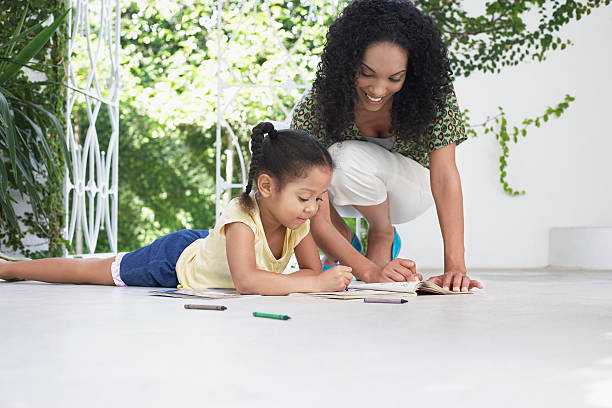
There is a moment that nearly every mother knows. Your child is on the floor, face flushed, tears streaming, voice rising into a pitch that seems to rattle the windows. Maybe it is over a broken cracker, a lost toy, or the simple injustice of being told it is time to leave the playground. And in that moment, a familiar wave rises inside you, too. It is not just frustration or exhaustion. It is guilt. Guilt that you did not prevent this meltdown. Guilt that you feel impatient when you should feel compassionate. Guilt that somehow, deep down, you must be doing something wrong.
If this sounds familiar, please take a gentle breath. You are not failing. You are navigating one of the most tender and challenging parts of motherhood: holding space for your child’s big emotions while managing your own inner storm. When your child is swept away by anger, grief, or frustration, it can feel as though their feelings are a direct reflection on you. But the truth is, children’s big emotions are not a sign of bad parenting. They are a sign of healthy development. Your child’s brain is still learning how to process overwhelming sensations. And you, dear mom, are their safe harbor.
The instinct to fix, to soothe, to make everything better is powerful. When your child cries, your own nervous system may tense, sending out alarms that say, “Fix this now.” And when you cannot fix it quickly—or when your child rejects your attempts to help—guilt rushes in. You might hear a voice whisper that you are not patient enough, not loving enough, not calm enough. But here is a kinder truth: You do not have to calm your child down. You only have to stay calmly nearby.
One of the most freeing shifts you can make is to stop seeing your child’s big feelings as a problem to solve. Instead, see them as a moment to witness. Your child is not giving you a hard time. They are having a hard time. When you can separate their emotional explosion from your own worth as a mother, the guilt begins to loosen its grip. You can say to yourself, “This is not my fault. This is my child’s feeling, and I can be here without taking it personally.”
Of course, that is easier said than done in the heat of the moment. When the screaming is loud and the clock is ticking and you have a thousand other things to do, staying present can feel impossible. That is when you need a small, simple practice. Try placing one hand on your own heart and taking a slow breath. Whisper inside your mind, “I am safe. My child is safe. This feeling will pass.” You are modeling regulation, not perfection. Your child learns not from your words but from your presence. When you stay grounded, you send a silent message: Big feelings are survivable. You are not alone.
And what about the inevitable moments when you lose your cool? When you snap, raise your voice, or walk away in frustration before you come back? That is not the end of the story. In fact, those moments are where some of the deepest healing can happen. After the storm passes, you have a golden opportunity to repair. Kneel down, look your child in the eyes, and say gently, “I got overwhelmed too. I am sorry I yelled. I love you, and I am here now.” Repairing does not erase the conflict, but it teaches your child something invaluable: that love includes making mistakes and coming back together. This act of repair is also a powerful antidote to guilt. You are not a perfect mother, but you are a real one, and real is what your child needs most.
It may also help to remember that your child’s big emotions are often not about you at all. A toddler melting down because you cut their sandwich into triangles instead of squares is not rejecting your care. They are learning about control, order, and the limits of their tiny world. An older child sobbing over a failed test is not blaming you. They are feeling the weight of their own disappointment. Your job is not to take that weight onto your own shoulders. Your job is to sit beside them and say, “I see how hard this is. I am with you.”
So the next time your child’s feelings rise like a wave, try to let them wash over without drowning in guilt. Breathe. Stay close or give space, whichever feels safest for both of you. Trust that you do not need to have all the answers. You just need to be present, imperfect, and willing to try again. That is enough. That is more than enough. And in that gentle permission to feel—for both you and your child—lies the quiet, powerful truth of resilient parenting.