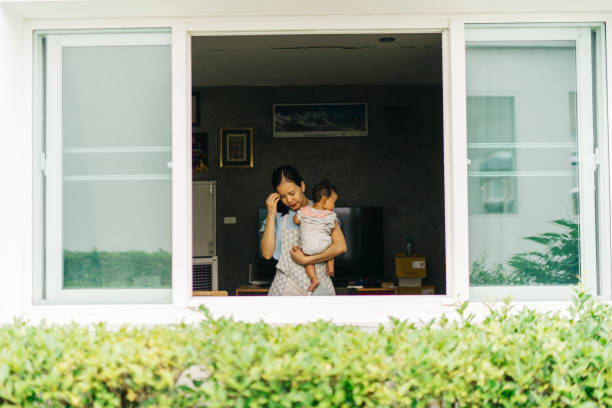
When you become a mother, advice arrives from every direction. Some helpful, some hurtful, some wrapped in concern. Family gatherings can feel like a review panel. “Are you sure you should pick him up every time?“ “We never did it that way.“ “He’ll never learn to sleep if you...“ The pressure can make even simple choices feel heavy. But your parenting choices belong to you and your child. Embracing them doesn’t mean rejecting everyone else; it means listening to your own wisdom, your child’s needs, and your family’s values, then deciding what fits.
Many mothers feel torn between being respectful and being true to themselves. You want harmony. You want your mother or mother-in-law to feel valued. You want friends to approve. But if every decision is made to avoid disappointing someone else, resentment grows. You may start second-guessing yourself. The goal isn’t to win arguments. It’s to create a calm, consistent home where your child feels safe and you feel grounded.
Start by noticing where pressure lives in your body. Maybe your shoulders tighten when someone comments on your toddler’s behavior. Maybe your stomach drops when a relative questions your choice to work or stay home. That tension is information. It tells you a boundary is needed. A boundary can be as simple as, “We’ve decided to do it this way, and I’m not looking for other options right now.“ Said gently, it doesn’t attack. It just clarifies. You don’t owe anyone a detailed defense of your choices.
It helps to remember that parenting has changed. Grandparents raised children with the information they had. Some of their methods were loving and effective. Others may not match what we know now about child development, safety, or emotional health. You can honor their love without following their every instruction. You can say, “I know you did what worked for you. This is what works for us.“ That sentence respects both generations.
Friends can bring a different kind of pressure. Social media makes it look like everyone else has a cleaner house, a calmer routine, a more adventurous child. But you are seeing highlights, not the whole story. Your child is not a project to optimize. Your mothering is not a competition. When you compare, you lose touch with your own instincts. Instead, ask: What does my child need from me today? What do I need to stay steady? Those questions are more reliable than a hundred opinions.
Embracing your own parenting choices also means allowing yourself to change your mind. You might try one approach and discover it doesn’t fit. That isn’t failure. That’s learning. You are allowed to say, “We tried that, and it wasn’t right for us.“ Flexibility is a strength, not a weakness. It shows your child that adults can adapt, apologize, and grow.
There will be moments when you feel alone in your decisions. Maybe you choose gentle discipline when others expect punishment. Maybe you choose to limit screens when others hand over tablets. Maybe you choose to feed your child differently. In those moments, seek out one or two people who understand. A supportive friend, a trusted pediatrician, a counselor, or a community of mothers can remind you that you’re not crazy. You’re just parenting with intention.
And on the hardest days, lower the bar. You don’t have to explain yourself to everyone. You don’t have to attend every event. You don’t have to answer every criticism. You can say, “I’ll think about that,“ and then let it go. You can leave a tense room and take three deep breaths. You can remind yourself that your child needs a present mother more than a perfect one.
Your parenting choices are not a referendum on anyone else’s. They are your best attempt, made with love, in real life. When family and friends disagree, listen for the love beneath their words, then return to your own center. You are the one who knows your child’s rhythms, fears, and joys. You are the one who is there in the quiet moments. Trust that. Not every choice will be popular. But it can be yours. And that kind of confidence, gentle and steady, is something your child will feel every day.