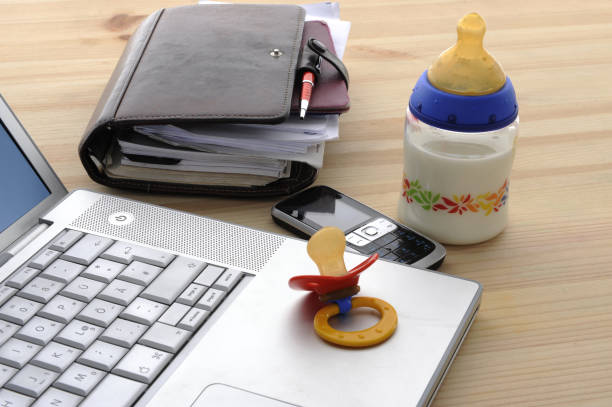
The idea of balancing work and family is often presented as a mythical equilibrium, a perfect state that, once achieved, means you’ve finally “made it.“ For mothers, this pursuit can feel less like balance and more like a daily juggling act where the balls are made of glass. The truth is, a rigid career path is often the enemy of a manageable family life. The real solution isn’t about perfectly partitioning your day into neat blocks of time; it’s about finding and creating flexibility within your career itself. This is not about working less hard, but about working smarter in a way that respects both your professional ambitions and your irreplaceable role at home.
Flexibility is the cornerstone that allows you to attend the school play without a panic attack, manage a sick child without using a precious vacation day, or simply start the dinner hour without being mentally consumed by an unfinished project. It transforms work from a source of constant scheduling conflict into a component of a life that works. The first step is a direct conversation with yourself. Define what flexibility actually means for your unique situation. Does it mean core hours of 9 AM to 3 PM with work completed earlier or later? Is it the ability to work from home two days a week? Is it project-based work instead of hourly? Get brutally honest about what would materially reduce your daily stress.
Armed with that clarity, you must then advocate for it. Approach this not as a plea for special treatment, but as a professional proposal. Frame the conversation around outcomes and solutions. Instead of saying “I need to leave at 4 PM,“ prepare to say, “To ensure I can maintain my high level of productivity while managing afternoon family responsibilities, I propose adjusting my schedule. I will be fully available from 7 AM to 4 PM, and will log back in after 8 PM to complete any remaining tasks and correspondence. This ensures coverage and continuity.“ This demonstrates commitment and forethought, not just a personal need. Highlight how this structure will allow you to be more focused and productive during your core working hours, free from the distraction of worrying about logistics.
Technology is your ally in this mission, but only if you control it. Use it to create clear boundaries, not to erase them. Set “do not disturb” hours on your work messaging apps during family time. Mute email notifications after a certain hour. Conversely, use cloud storage and shared documents to prove your reliability and accessibility when you are working remotely. The goal is to build trust through consistent delivery, showing that the work is getting done excellently, regardless of where or when it’s completed.
Remember, flexibility is a two-way street. Protect the trust your employer grants you by being relentlessly reliable. Meet your deadlines, over-communicate when working remotely, and be fully present during your defined work hours. This builds the credibility that allows flexibility to become permanent, not a temporary concession.
Finally, understand that industries and companies vary widely in their inherent flexibility. If your current role is fundamentally incompatible with the structure you need, your career flexibility may require a pivot. This could mean seeking a role in a company with a documented family-friendly culture, exploring freelance or consulting work in your field, or even transitioning your skills to a different industry known for better work-life integration. Your career is a tool to build the life you want, not the other way around.
For mothers, daily stress is often a product of relentless rigidity—the immovable meeting versus the unmissable doctor’s appointment. By strategically building flexibility into the very fabric of your career, you replace that brittle structure with something resilient. You stop trying to split yourself in two and start building a life where your professional and personal worlds can coexist, not in perfect, static balance, but in a dynamic and sustainable harmony.