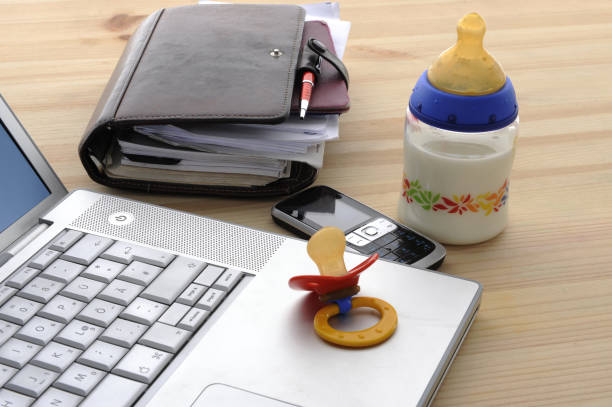
For many mothers, the day can feel like a long hallway with doors opening and closing all at once. A child needs help with homework, a work message pings, dinner needs a plan, and somewhere in the middle of it all, you are supposed to find a moment to breathe. Time-blocking is often described as a productivity trick for executives, but it can be something much softer and more realistic for family life. It is not about squeezing every minute into a perfect grid. It is about giving your days a gentle shape so that the things you value most have a place to land.
The first shift is to think of time blocks as containers, not commands. A container holds what you choose to put inside it. If you block Tuesday morning for focused work, that does not mean the world will cooperate. A toddler may wake up cranky. A school may call. A client may need something urgent. The block is simply a signal that says, “If nothing else is on fire, this is where my attention goes.” When the block gets interrupted, you do not have to throw out the whole day. You can notice what happened, adjust, and begin again with the next block. This flexibility is what makes time-blocking sustainable for mothers of any age and stage.
Start with your anchors. Anchors are the parts of the day that rarely move: wake-up, school drop-off, work hours, meals, bedtime, and the moments when you need to rest. Instead of building a schedule from scratch, place these anchors first. Then look at the spaces between them. Those spaces are where time-blocking becomes useful. Maybe you have a twenty-minute pocket after lunch. You could label it “admin,” “quiet connection,” or “reset.” The label matters less than the intention. A block can be as short as fifteen minutes and still change the feel of a day.
It helps to give your blocks themes rather than long task lists. A theme like “deep work” tells your brain what kind of energy to bring. A theme like “household” gives you permission to fold laundry or pay bills without feeling like you should also be answering emails. A theme like “connection” can be as simple as sitting with your child while they tell you about their day, or calling a friend while you walk. When you theme your time, you reduce the mental switching that leaves so many mothers exhausted by noon.
Buffers are another gentle secret. Many schedules fail because they are packed edge to edge. Real life needs transition time. If a work block ends at three, do not schedule a family block for three o’clock sharp. Give yourself ten or fifteen minutes to close the laptop, breathe, and shift roles. Those small margins are not wasted time. They are the soft padding that keeps the whole day from fraying.
You can also involve your family in the rhythm. Children of all ages can understand simple blocks when they are explained with warmth. “This is my work block. After it, we will have our snack and talk.” A partner can share a calendar or take one block of responsibility. This is not about asking for perfection. It is about making your invisible work a little more visible. When everyone knows what to expect, the household can move with less friction.
Perhaps the most important block is the one that holds rest. Mothers often treat rest as what happens after everything else is done, which means it rarely happens at all. Put a small rest block on the calendar with the same seriousness as a meeting. It might be a cup of tea without your phone, a walk around the block, a few pages of a book, or simply lying down for ten minutes. Rest is not a reward for finishing. It is part of how you keep going.
Finally, remember that time-blocking is a practice, not a test. Some weeks will flow. Some will fall apart by Monday morning. When that happens, you are not failing. You are living a full family life. The goal is not a flawless schedule. The goal is to feel a little more grounded, a little less scattered, and a little more kind to yourself. A gentle block here and there can become a rhythm that carries you through the week, not as a machine, but as a mother who is doing her best and deserves space to breathe.